Book club serves a range of purposes for me. I love the community, the tight-knit nature of the group — it can always get bigger and remain close, there’s room for you, etc.—the check-ins, the way we remember each other’s stories. I also love the focus on authors of the global majority, as well as queer authors and texts. But something I did not expect is how our texts help me imagine the world I want to build on the other side of this iteration of American fascism. Repeatedly, I have observed activists and social commentators I follow on social media, through newsletters, and in podcasts, reminding me that finding a way forward necessarily requires a conception of what we want to build. Yes—let’s abolish the forces kidnapping our neighbors from the streets and the structures that fund and even support their existence—but what will replace the surveillance regime and its attendant violence? When I’ve spoken with community members and acquaintances about police abolition, the common refrain was “Well, what will you do if someone breaks into your house?” The abolitionist movement (i.e., of police, the carceral industrial complex, state surveillance as a form of organized abandonment) is not new, even if I am only about five years into exploring these concepts. Over the past year, I continually reminded myself that abolition is not simply about destruction but about creation, and then my brain would often… stall. Flatline in the hunt for new ideas, continually flip like the old hourglass on an ancient desktop. My facility for creativity in times of survival underlines my upbringing in fundamentalist, white Christian nationalist Christianity, and my whiteness. These two systems did a lot to forestall my imagination, to shrink what I could dream into being.
Around September of this year, I realized I was bringing our authors’ vision into my everyday life in ways that surprised and amused me. At the Charlotte airport, I looked out over the vestibule that includes the food court and a row of rocking chairs flanking the moving walkway. Suddenly, I thought—what would these folks do if there were a dance party and a barbecue here instead? What if we didn’t know when the planes were coming (Sky Full of Elephants)? It would, of course, be chaos. But what if it were a year or two into a new, previously unimaginable world (Sky Full of Elephants)? There are tethers for me throughout the books we’ve read—and to be clear, they are not dystopias or stories about revolution, per se. As I allow our books to shape the imaginary trajectory of my inner world, I’m beginning to hold a series of exclusions and inclusions that could shape a world where building is possible in the wreckage of the old.
I know, for example, that I want a world in which no child must sneak a bite of the world’s best peach cobbler from the garbage (The Secret Life of Church Ladies). Instead, I want that dish on the table, where everyone can sit and bring their full selves, where there is enough for all. I want a crab boil in the middle of every winter, if only to know I am loved, and that my roots follow me into every landscape, no matter how harsh and unforgiving (The Secret Life of Church Ladies). I want to be a safe person for family and community memories, a carrier of letters through the generations (Zeal). However, I want to do more than pass these missives on—I want to be both writer and receiver, documenting a great love that has the power to change the arc of our lives (Zeal). That is what resistance and revolution are, yes?
Beyond letters, there are other ways our stories remind me to go analog in the tech-heavy context of the present oppression (The Office of Historical Corrections). As writer Danielle Evans reminded me this year, all items have a history and language—we can correct history with a plaque, but whose history will it tell (The Office of Historical Corrections)? Will we one day place markers that say, “our neighbor was kidnapped here,” and will we tell the truth about the social constructs that made it possible (The Final Revival of Opal & Nev) and the violent systems that expanded state power so deeply into our lives? Science fiction and fantasy help me consider other approaches—we could refocus our resistance efforts on something as deeply pre-digital as hand-carving, imagining the tapestry of a world on the surface of a stone (The Emperor’s Soul). Alternatively, we could think much smaller, challenging the notion of time and implanting ourselves into other worlds at the cellular level (This is How You Lost the Time War). Max Gladstone and Amal El-Mohtar reminded me that together, we can make beautiful things, imagine the cleverest disguises and trick the most invasive systems into believing they have won until it is too late (This is How You Lost the Time War).
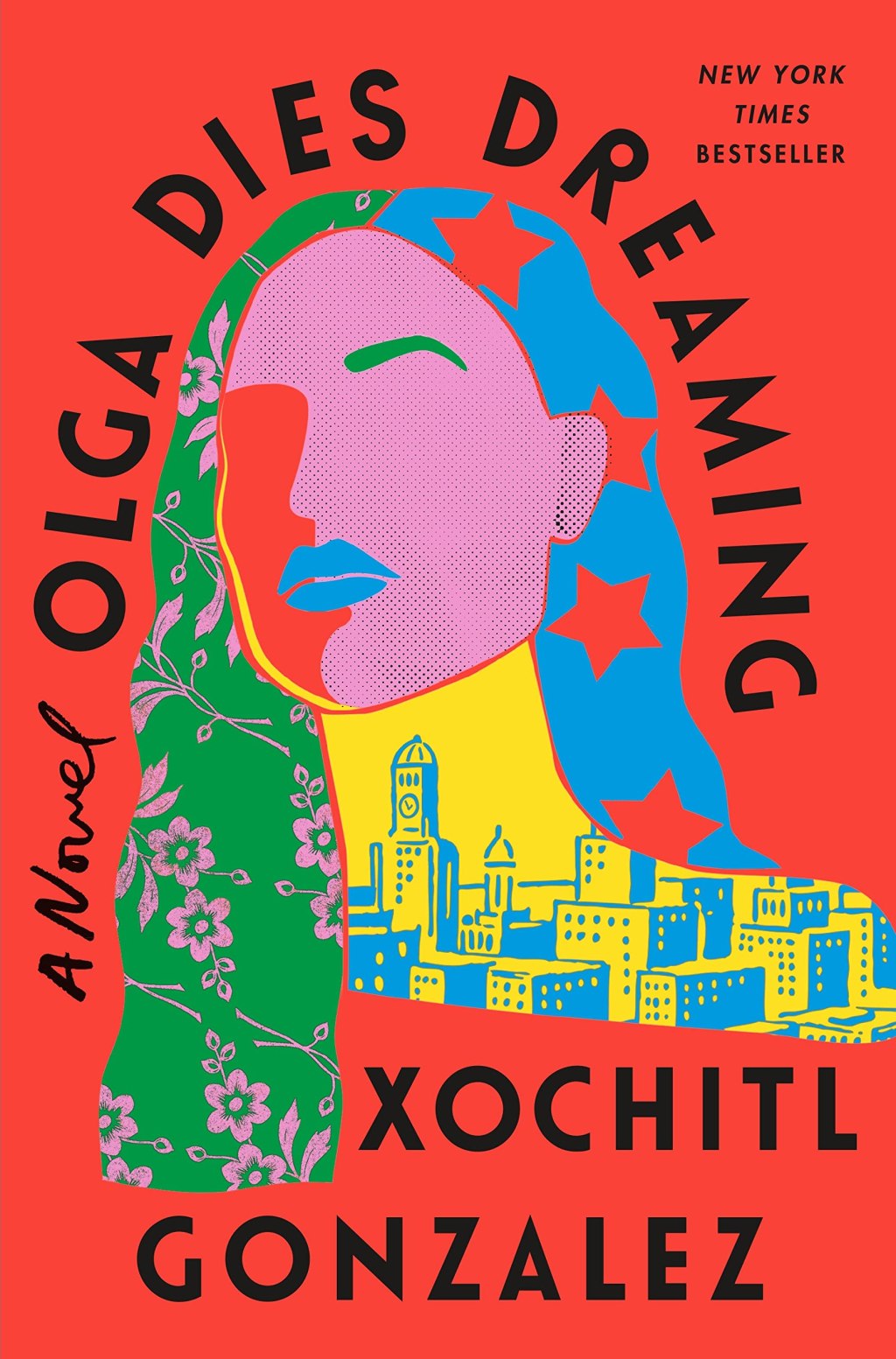
In my darkest moments this year, I imagined I would not live to see the end of this authoritarian moment; I might not. Again, I find fiction to be a refuge and an engine, showing me that we can create different family structures and ways of being in community, no matter our political context (Middle Spoon). No one can stop us from taking care of each other (Olga Dies Dreaming). There are also warnings, if I care to pay attention. For example, resistance work, activism, and organizing should never take precedence over my human relationships (Olga Dies Dreaming). If my desire for a different existence looms larger than my ability to see others as human beings, I could lose my way, with devastating consequences (Death at the White Heart).
I cannot predict what will happen this year, and I do not know which books we will read together, but I’m excited to consider what our upcoming texts have to teach me, and how I can continue to use the gifted authors to imagine another world, a world I am already building in my mind.
 There's Room of North Carolina
Leave a comment